2026 Federal Spring Economic Update: Key Tax Changes for Individuals and Businesses
Sheryne Mecklai — July 20, 2026
Tax
Finance Minister François-Philippe Champagne tabled the 2026 Spring Economic Update on April 28. While corporate and personal income tax rates remain unchanged, the update introduces several meaningful measures from expanded green energy incentives to relief for tradespeople and first-time homebuyers.
Highlights
The measures noted below are proposals and most require legislation to take effect.
Canada Pension Plan
Effective January 1, 2027, basic CPP contribution rates will decrease slightly. The employer/employee rate drops from 4.95% to 4.75%, and the self-employed rate falls from 9.9% to 9.5%.
Canada Strong Fund: A New Sovereign Wealth Fund
The government announced the Canada Strong Fund which is Canada’s first national sovereign wealth fund, with an initial $25 billion endowment over three years. It will invest in strategic Canadian projects and companies on a commercial basis.
Employee Ownership Trust Exemption
The exemption which allows a $10M capital gains exemptions for sales to Employee Ownership Trust has now been made permanent. The exemption was previously set to expire after 2026.
Home Buyers’ Plan Relief
The five-year RRSP repayment grace period, which defers when homebuyers must start repaying funds withdrawn under the Home Buyers’ Plan, is now extended to cover withdrawals made up to December 31, 2028. Previously, the grace period only applied to withdrawals made through the end of 2025.
Deduction for Tradespeople Who Relocate
Starting in 2026, eligible tradespeople and apprentices in the construction industry can deduct up to $10,000 in temporary relocation expenses (up from $4,000), indexed going forward. The distance threshold for temporary lodging also drops from 150 km to 120 km closer to a work site than one’s primary home.
Streamlining the Disability Tax Credit (“DTC”)
Starting in 2026, the government will simplify Canadians’ access to the DTC. The application process will be streamlined for those with certain long-lasting medical conditions. In addition, provincial or territorial public guardians, trustees, and curators will be permitted to certify on behalf of adults under their care and, beginning in 2027, podiatrists will be added to the list of medical practitioners who can certify DTC eligibility for walking impairments.
Accelerated CCA for LNG Facilities
The government has confirmed implementation rules for the 2025 budget’s proposal to reinstate accelerated CCA for low-carbon LNG facilities. To qualify, a facility must be certified by the Minister of Energy and Natural Resources and must achieve an emissions intensity no greater than 0.20 tonnes of carbon dioxide equivalent per tonne of LNG produced.
Eligible assets acquired between November 3, 2025 and December 31, 2035 can claim a 50% rate for liquefaction equipment (Class 47) and 10% for non-residential buildings (Class 1).
Carbon capture, Utilization and Storage (CCUS) ITC
The CCUS ITC will be expanded to include enhanced oil recovery for equipment acquired after April 27, 2026, the CCUS investment tax credit now covers enhanced oil recovery (EOR) at half the rates that apply to other eligible uses.
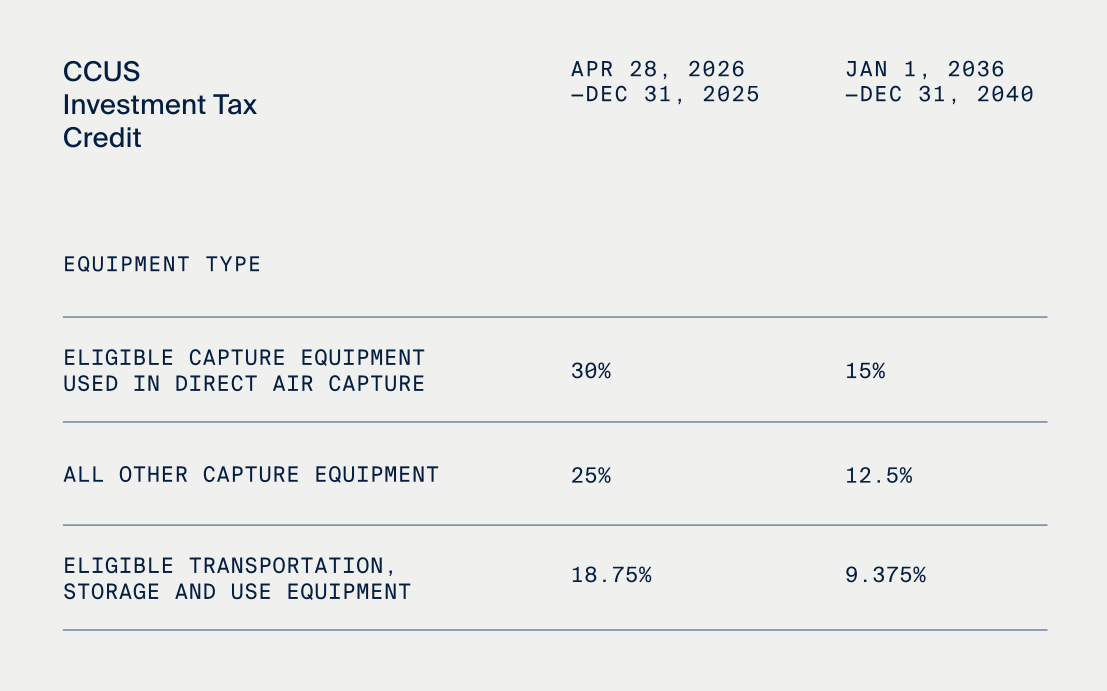
↑ Related adjustments will be made to recognize EOR as a form of CO2 storage for purposes of the clean hydrogen ITC and the clean electricity ITC.
Prioritizing Certain Projects in Tax Processes
The Canada Revenue Agency will prioritize advance tax ruling requests for large-scale housing and infrastructure projects, as well as investments in clean energy and other critical economic sectors.
Still Have Questions About 2026 Federal Spring Economic Update?
Please contact one of our Manning Elliott tax experts If you have questions about how these measures may affect you or your business.
Manning Elliott regularly posts new blogs and up-to-date articles on the most recent BC and federal taxation changes.
NOTE: Tax laws are complex and are subject to frequent change. The contents of this Manning Elliott article are not intended to represent legal or tax advice. Please consult your tax adviser before employing any strategies that may have been discussed within this article.